
Sometimes, the signs that it’s time to move are obvious. Maybe your family has grown and every room feels crowded. Perhaps you’ve accepted a new job across town, or you’ve realized your current neighborhood no longer matches your lifestyle. Other times, the signs develop gradually—a longer commute, mounting maintenance costs, changing family needs, or the feeling that your home simply isn’t working the way it used to.
Deciding to move is one of the biggest choices most homeowners make, and it’s rarely based on just one factor. Instead, it’s usually the combination of several small frustrations that eventually outweigh the comfort and familiarity of staying put. A house can still be perfectly livable while no longer being the right home for the next stage of your life.
That distinction is important. You do not necessarily need to wait for a major life event or serious problem before considering a move. Sometimes the best time to relocate is when you have enough flexibility to carefully evaluate neighborhoods, compare homes, prepare your finances, declutter your belongings, and organize the move without feeling rushed.
If you’ve been wondering whether relocating makes sense, these 10 signs it’s time to move can help you evaluate your current situation. One sign alone may not be enough to start packing boxes. However, if several of these situations sound familiar, it may be worth taking a closer look at whether another home could better support your family, finances, work, and lifestyle.
1. You’ve Outgrown Your Space
A home that once felt spacious can quickly become cramped as life changes. A growing family, children needing their own bedrooms, hobbies requiring dedicated space, or the addition of a home office can all make your current layout feel inadequate. Even a house with plenty of total square footage can feel small when the layout no longer matches how your household actually uses the space.
When closets overflow, storage bins fill every corner, and you’re constantly rearranging furniture just to make things fit, your house may no longer be serving your needs. You might notice toys taking over common areas, kitchen cabinets that cannot hold everything your family uses, or bedrooms doing double duty as offices, workout spaces, and storage rooms.
Before deciding that moving is the only solution, consider whether better organization, decluttering, or a renovation could solve the problem. Sometimes removing belongings you no longer need can make a surprisingly large difference. In other cases, finishing a basement, adding built-in storage, or changing the purpose of an existing room can extend the usefulness of your current home.
However, renovations have limits. Adding square footage can be expensive, disruptive, and difficult depending on the property. If you would need a major addition or extensive remodeling to make the house fit your family, comparing those costs with the cost of moving into a more suitable home can provide valuable perspective.
Think about your needs several years from now as well. If you already feel cramped and expect your household to grow, moving before space becomes a serious problem can give you more time to find a home that works both today and in the future.
2. Your Commute Is Taking Over Your Life
Spending an extra hour or two in traffic every day doesn’t just cost money—it costs time you’ll never get back. Over the course of a week, month, or year, even a moderately long commute can add up to hundreds of hours behind the wheel.
Many homeowners choose to move simply to reclaim time with their family, reduce stress, or live closer to work, schools, and frequently visited destinations. If your commute leaves you exhausted before your day even begins, relocating could dramatically improve your quality of life.
There are financial considerations as well. Longer commutes generally mean more fuel, more frequent maintenance, additional mileage, and faster vehicle depreciation. Those costs may seem relatively small on a daily basis, but they can become substantial over several years.
Your commute should also be considered in the context of your entire household. Perhaps one person has an easy drive while another spends an hour traveling across the metro each morning. School drop-offs, childcare, activities, appointments, and regular trips to visit family can add even more driving.
For families in the Des Moines metro, moving even a relatively short distance can significantly change these routines. Living closer to the places you visit most frequently can give you back time every week without requiring a dramatic change in your overall lifestyle.
If you find yourself regularly saying that you would have more time to exercise, cook dinner, attend your children's activities, or simply relax if you did not spend so much time driving, your location deserves serious consideration.
3. Home Repairs Never Seem to End
Every home requires maintenance, but there’s a difference between routine upkeep and constantly fixing expensive problems. Older properties in particular can reach a point where several major systems need attention within a relatively short period.
Roof repairs, aging heating and cooling systems, plumbing issues, outdated electrical work, foundation concerns, deteriorating siding, old windows, and recurring maintenance can become financially draining. One repair might be manageable, but several major projects scheduled within the next few years can significantly change the financial equation.
If you’re spending thousands of dollars every year just keeping your home functional, it may be worth comparing those costs to the benefits of purchasing a newer or better-maintained home. Make a realistic list of the projects your property will likely require during the next five years and estimate their potential cost.
Money is not the only consideration. Home projects require time, planning, appointments, contractor coordination, and often temporary disruption to your daily routine. Some homeowners enjoy maintaining and improving an older property. Others eventually reach a point where they would rather spend their weekends doing something else.
Moving to a newer home does not eliminate maintenance completely, of course. Every property requires care. However, if the age or condition of your current home means you are constantly preparing for the next repair, relocating may give you a more predictable living situation.
4. Your Neighborhood Has Changed
Sometimes it’s not the house that has changed—it’s everything around it. Neighborhoods naturally evolve, and the characteristics that originally attracted you to an area may not remain the same forever.
Perhaps traffic has increased, new development has changed the character of the area, or your priorities have shifted toward schools, parks, walkability, shopping, restaurants, or quieter surroundings. Maybe you simply want to live closer to family and friends.
The opposite can happen too. A neighborhood may remain essentially the same while your lifestyle changes dramatically. A location that was perfect when you were single or newly married may feel less convenient after having children. Likewise, someone whose children have moved away may no longer need to prioritize proximity to schools and activities.
Where you live has a major impact on your daily happiness, so it’s worth asking whether your current neighborhood still supports the lifestyle you want. Think about the places you visit every week and how easily you can reach them from your current home.
It can also help to spend time in neighborhoods you are considering before making a decision. Visit during weekday mornings, evenings, and weekends. Pay attention to traffic, noise, parks, shopping, sidewalks, nearby services, and how the area feels at different times of day.
A great house in the wrong location can create frustrations that renovations cannot solve. If you still love your home but consistently wish it were somewhere else, location may be one of the strongest signs that moving deserves consideration.
5. Your Financial Situation Has Improved
One of the best times to move is when your finances give you more flexibility. A move made from a position of financial stability often provides more options than one prompted by an urgent situation.
If you’ve built equity in your current home, increased your income, improved your credit score, reduced other debts, or accumulated savings, you may have opportunities that weren’t available just a few years ago.
For example, you might be able to afford a home with an additional bedroom, a larger yard, a shorter commute, or features that would have previously stretched your budget. Alternatively, your stronger financial position might allow you to downsize and redirect money toward retirement, travel, education, or other goals.
However, being able to afford a more expensive house does not automatically mean buying one is the right choice. Consider the entire cost of ownership, including the mortgage payment, property taxes, insurance, utilities, maintenance, association fees, and commuting expenses.
It is also useful to consider the expenses associated with selling and moving. Preparing your current home for sale, closing costs, moving expenses, temporary storage, new furniture, repairs, and other transition costs should all be part of the calculation.
Whether you’re upgrading to a larger home, purchasing your forever home, or downsizing to reduce expenses, stronger finances can make moving a smart long-term decision when the numbers align with your broader goals.
6. You’re Ready for a Fresh Start
Not every reason for moving can be measured in square feet or dollars. Homes become closely connected to routines, memories, relationships, and different stages of life. As those circumstances change, you may simply feel ready for something different.
Sometimes a new home represents a new chapter. Whether you’re starting a family, changing careers, entering retirement, recovering from a difficult season, or craving a different environment, a move can provide the fresh beginning you’re looking for.
That might mean moving from a busy area to a quieter neighborhood, choosing a home with outdoor space, living closer to downtown amenities, or finding a community where you can become more connected. The right change will look different for every household.
While moving won’t solve every problem, a new space can create renewed motivation, excitement, and a stronger sense of possibility. Sometimes changing your surroundings also provides an opportunity to reconsider what you own and how you want to spend your time.
A move naturally encourages you to sort through belongings, simplify rooms, rethink furniture, and decide what deserves to come with you. For some people, that process itself makes a new home feel like a genuine fresh start rather than simply a different address.
Before making the decision based entirely on emotion, give yourself time to determine what you actually want to change. If your goals consistently point toward a different type of home, neighborhood, or lifestyle, moving may be a practical way to support that next chapter.
7. Your Household Is Changing
Life rarely stays the same for very long. The number of people living under your roof, their ages, schedules, mobility needs, and daily routines can change considerably during the years you own a home.
Marriage, divorce, welcoming a new baby, children leaving for college, caring for aging parents, or combining households can all change the way a home functions. Even when the total number of people in the house stays the same, your space requirements can change.
For example, young children may happily share bedrooms but eventually need more privacy. Teenagers may require additional vehicle parking and study space. An aging parent moving into the household might make a main-floor bedroom and bathroom particularly valuable.
On the other side of the equation, parents whose children have moved away may suddenly find themselves maintaining far more house than they need. Several unused bedrooms, multiple living spaces, and a large yard may begin to feel like responsibilities instead of benefits.
If your current home no longer fits the people living in it, that’s one of the clearest signs it’s time to start exploring other options. Consider not only your household today but also how it is likely to change during the next several years.
Planning ahead can make the transition considerably easier. Moving before a home becomes severely overcrowded or difficult to maintain gives you more control over timing and allows you to make decisions without unnecessary pressure.
8. Working From Home Isn’t Working
Remote and hybrid work have permanently changed what many people need from their homes. A property chosen before working from home became common may not have the layout or features necessary to support a productive workday.
Kitchen tables, spare bedrooms, basement corners, and makeshift offices may work temporarily, but long-term productivity often requires a dedicated workspace, reliable internet access, better lighting, appropriate storage, and fewer distractions.
The challenge becomes even greater when two adults work remotely or when children are home during portions of the workday. Video calls, confidential conversations, equipment, paperwork, and competing schedules can quickly make shared spaces difficult to manage.
A dedicated office can also create a healthier separation between professional and personal life. Being able to close a door at the end of the workday can make it easier to mentally leave work behind rather than feeling as though your office follows you into every room.
Before moving solely because of your workspace, consider whether an existing bedroom, basement area, loft, or other space could be converted into a functional office. A relatively modest improvement may solve the problem.
However, if your home simply does not have enough space or the layout makes remote work consistently frustrating, moving to a home that better supports the way you work today may be worth considering.
9. You’re Paying for Space You Don’t Use
Bigger isn’t always better. The amount of space that makes sense for your household can change considerably over time, especially after children move away or your lifestyle becomes simpler.
Many homeowners eventually realize they’re heating, cooling, cleaning, furnishing, repairing, and maintaining rooms they rarely enter. Empty bedrooms, unused formal dining rooms, finished basements, extra bathrooms, and oversized yards all require some combination of time and money.
Walk through your home and consider how frequently each room is actually used. If significant portions of your house go untouched for weeks at a time, you may be paying a premium for square footage that provides very little benefit.
Downsizing can reduce utility bills, property taxes, maintenance costs, and the amount of time spent caring for a home. A smaller property may also require less furniture and fewer household items, making everyday organization easier.
There can be lifestyle benefits as well. Reducing the responsibilities associated with a large home can free up money and time for travel, hobbies, family, retirement, and other priorities. For homeowners approaching retirement, simplifying housing expenses can be especially valuable.
Of course, downsizing requires careful planning. Moving into a smaller property usually means deciding what furniture, decorations, tools, clothing, and sentimental belongings will fit in the new space. Starting that process well before moving day makes the transition significantly easier.
If you’re considering a smaller home, learn how to simplify the process with our Des Moines downsizing guide. Planning what to keep, donate, sell, store, and move can prevent downsizing from becoming overwhelming.
10. You’re Already Shopping for Homes
Sometimes your habits tell you the answer before your mind does. You may not have officially decided to move, yet you find yourself paying more attention to listings, neighborhoods, home prices, and properties for sale.
If you’re checking Zillow every evening, attending open houses on weekends, comparing neighborhoods, or saving listings you love, you’ve probably already started imagining yourself somewhere else.
Pay attention to what attracts you to those properties. Are you consistently looking at homes with larger kitchens? Are you searching for an extra bedroom, more land, newer construction, a particular school district, or a shorter commute? Patterns in the homes you save can reveal exactly what feels missing from your current property.
Browsing homes doesn’t automatically mean you should move, but if you’re consistently thinking about a different house or neighborhood, it’s worth asking what’s driving that desire.
You may discover that a relatively simple improvement to your existing home would make you happy to stay. Alternatively, you may realize that nearly everything you want involves factors that cannot easily be changed, such as location, lot size, overall square footage, or neighborhood amenities.
Instead of treating home browsing as a casual habit, use it as information. Make a list of the features that repeatedly catch your attention and compare them with your current property. That exercise can help clarify whether you simply enjoy looking at houses or are genuinely ready for a change.
How Many Signs Mean It’s Actually Time to Move?
There is no magic number that determines when someone should move. One major factor, such as a new job that requires relocation, may be enough. In other situations, several smaller issues may gradually build the case for moving.
One useful approach is to separate temporary frustrations from permanent limitations. Clutter can be reduced. Paint can be changed. A room can sometimes be remodeled. However, changing your home's location, lot size, neighborhood, basic floor plan, or proximity to work may be difficult or impossible.
Next, consider whether the problems with your current home are becoming more significant over time. A slightly cramped house may become substantially more difficult after another child arrives. A long commute may become more frustrating after accepting additional responsibilities at work. Home maintenance that feels manageable today could become burdensome as you approach retirement.
Finally, think about what you would gain from moving rather than focusing exclusively on what you would leave behind. A good move should solve meaningful problems or create meaningful opportunities. If another home would improve several important areas of your life at once, the disruption and expense of relocating may be worthwhile.
Should You Move or Improve Your Current Home?
Before putting your house on the market, compare moving with improving what you already have. Some homeowners discover that the location is perfect and only the house needs attention. Others realize they would have to change so many things that moving makes more sense.
Start by writing down the three biggest frustrations you have with your current home. Then determine whether each problem can realistically be fixed. Lack of storage might be solved with better organization or cabinetry. An outdated kitchen can be remodeled. Poor paint colors are easy to change.
Location-related problems are different. You cannot renovate your way to a shorter commute, move your property into a different school district, or make nearby relatives live closer. Likewise, adding significant square footage or completely changing a floor plan can sometimes cost enough that purchasing a different home becomes the more practical option.
Compare both paths financially, but also consider the disruption involved. Major remodeling can take months and may require living around construction. Moving has its own costs and challenges, but it can provide several desired improvements at the same time.
There is no universally correct answer. The goal is to determine which option gives your household the best combination of location, functionality, affordability, and long-term flexibility.
Quick Tip
What to Do Once You Decide It’s Time to Move
Deciding to relocate does not mean you need to start packing tomorrow. In fact, giving yourself plenty of preparation time can make the entire process easier.
Start by creating a rough timeline. Consider when you would ideally like to be in your new home, whether your schedule has busy periods you want to avoid, and how much time you will need to prepare your current property.
Next, begin reducing the amount of stuff you will need to move. Go room by room and identify belongings you no longer use. Donating, selling, recycling, or discarding unnecessary items before packing reduces the number of boxes that need to be handled and can make your new home easier to organize.
You should also begin researching moving companies before your preferred moving date approaches. Availability can become limited during popular moving periods, particularly during warmer months and around weekends. Starting early gives you more flexibility when comparing your options and selecting a date.
Finally, think about whether you will need additional services. Packing assistance can save considerable time, while temporary storage can help when closing dates do not line up perfectly or when you want to move belongings out of your current home before listing it.
Taking these steps gradually can turn what initially feels like an enormous project into a series of manageable decisions.
Ready to Make Your Move?
Once you’ve decided it’s time for a change, choosing the right moving company can make the entire experience far less stressful. Professional movers can handle much of the physical work while you concentrate on everything else involved with transitioning from one home to another.
At Blue Cow Moving & Storage, we’ve helped thousands of Iowa families move confidently throughout the Des Moines metro. Whether you’re moving into your first home, upgrading to accommodate a growing family, relocating across town, or downsizing after retirement, our experienced team can help make the transition easier.
Local moves can still involve a surprising amount of coordination. Furniture needs to be protected, boxes need to be organized, larger pieces may need to be disassembled, and everything must arrive at the correct room in the new home. Preparing these details ahead of time can make moving day much more efficient.
We offer professional packing services, secure storage solutions, and careful local moving services designed to make your moving day as smooth and organized as possible.
Storage can be particularly useful when the timing of a move is complicated. If your new home is not immediately available, you are downsizing, or you simply want additional time to organize, having a secure place for belongings can create more flexibility during the transition.
Before moving day arrives, we also recommend reading our guide to moving day mistakes to avoid. A little preparation can help you prevent common delays, reduce stress, and enjoy a more efficient move.
The earlier you begin planning, the more choices you generally have. Even if your move is still months away, creating a timeline, decluttering, researching services, and identifying what you need from your next home can make the eventual transition much easier.
Final Thoughts | The Right Time to Move Is When Life Tells You
There’s rarely a single moment when someone knows it’s time to move. Instead, the decision usually comes after recognizing a pattern of inconveniences, changing priorities, and new opportunities.
If several of these signs sound familiar, your current home may no longer be the best fit for your life. Taking the time to evaluate your options now can help you move on your own schedule rather than waiting until circumstances force the decision.
Try looking at the decision from several angles. Consider your finances, commute, family, work situation, neighborhood, maintenance responsibilities, and long-term plans. A home that performs well in one area may create unnecessary difficulty in several others.
It is equally important to think beyond the immediate excitement of buying another home. Ask whether a potential move will still make sense three, five, or ten years from now. The strongest moving decisions usually address both current frustrations and future needs.
You do not need to rush simply because you recognize a few signs that change might be beneficial. Instead, use that realization as an opportunity to start preparing. Research your options, understand your finances, explore communities, reduce clutter, and develop a realistic timeline.
A new home isn’t just about getting a different address. It’s about finding a place that better supports your family, lifestyle, goals, work, finances, and peace of mind. When your current home consistently makes those things harder instead of easier, it may finally be time to make your move.
Helpful Resources from Blue Cow
Real Blue Cow Moves
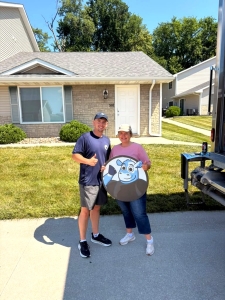
See Blue Cow in Action
Take a look at real moves completed by our team throughout Central Iowa.










































Helpful Moving Advice
Continue Reading
Best Neighborhoods in Ankeny | A Local Guide for Families
Read Article →How to Choose the Right Neighborhood in Ankeny (What Iowa Families Should know Before They Settle Down)
Read Article →How to Pack and Prepare Your Belongings for Long-Term Storage | Des Moines Storage Tips
Read Article →Choosing the Right Storage Solution in Des Moines | Self-Storage vs. Full-Service
Read Article →Helpful Moving Services
Explore Blue Cow Moving & Storage services related to this article.
Moving Services Near You
Find local Blue Cow Moving & Storage services in areas mentioned in this guide.